
Isaac Julien; All That Changes You. Metamorphosis.
Opening night at Victoria Miro, London - metamorphosis, kinship and the architecture of change

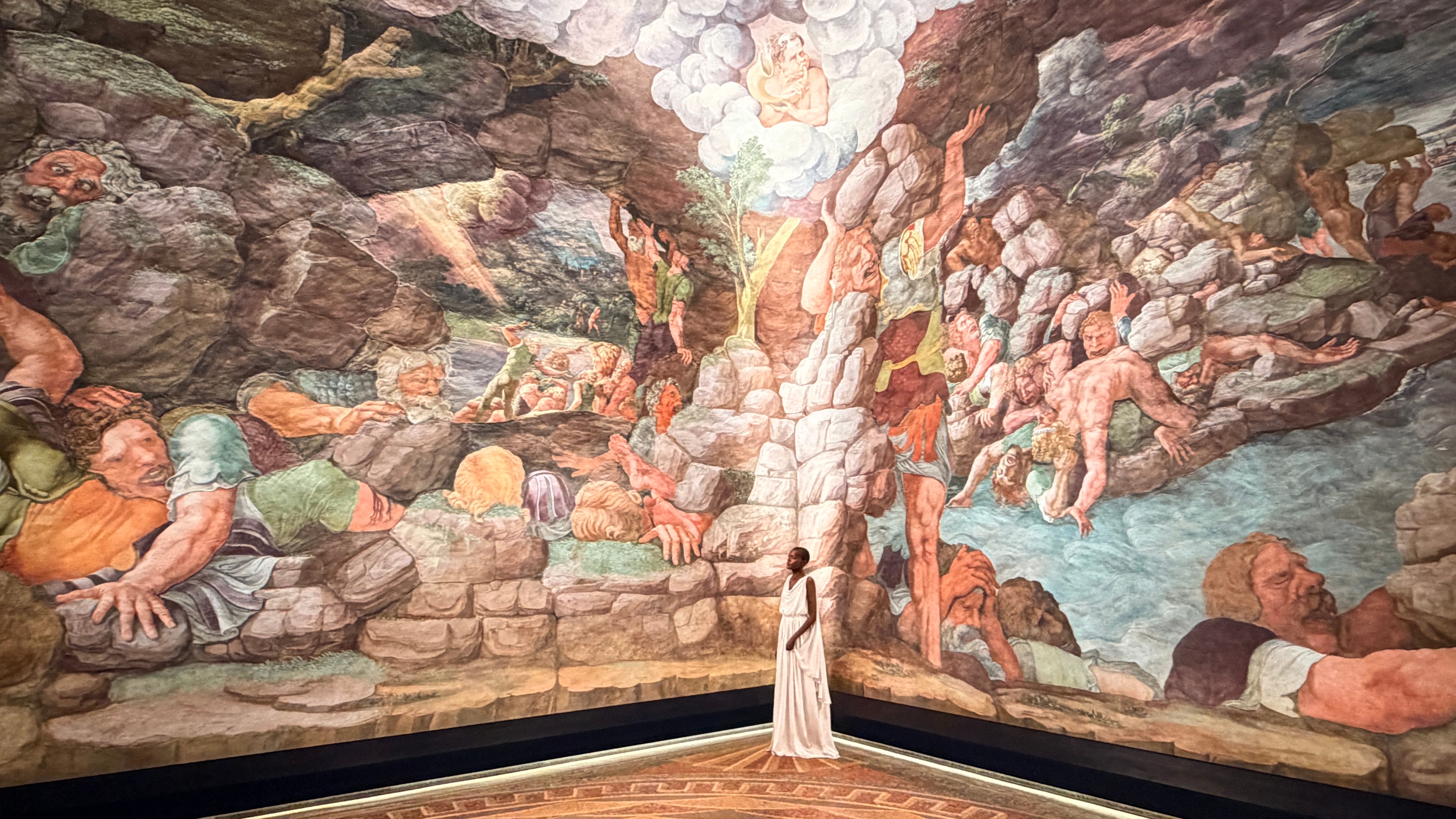
Following his triumphant retrospective at Tate Britain last year, it was a pleasure to encounter Isaac Julien’s latest work, All That Changes You. Metamorphosis, now installed at Victoria Miro after its presentation at Palazzo Te in Mantua. The sixteenth-century villa does not merely function as a backdrop to the film; it becomes an active architectural agent within it - a site of distortion, theatricality and transformation.
Julien has long explored the complexity of identity through the lenses of race, gender and sexuality. On the ground floor, a series of spectacular waxed inkjet prints offer a moment of stillness and surface beauty. Yet they do not fully prepare you for the immersive force of the multi-screen installation upstairs, where moving image reasserts itself as the core of Julien’s practice.
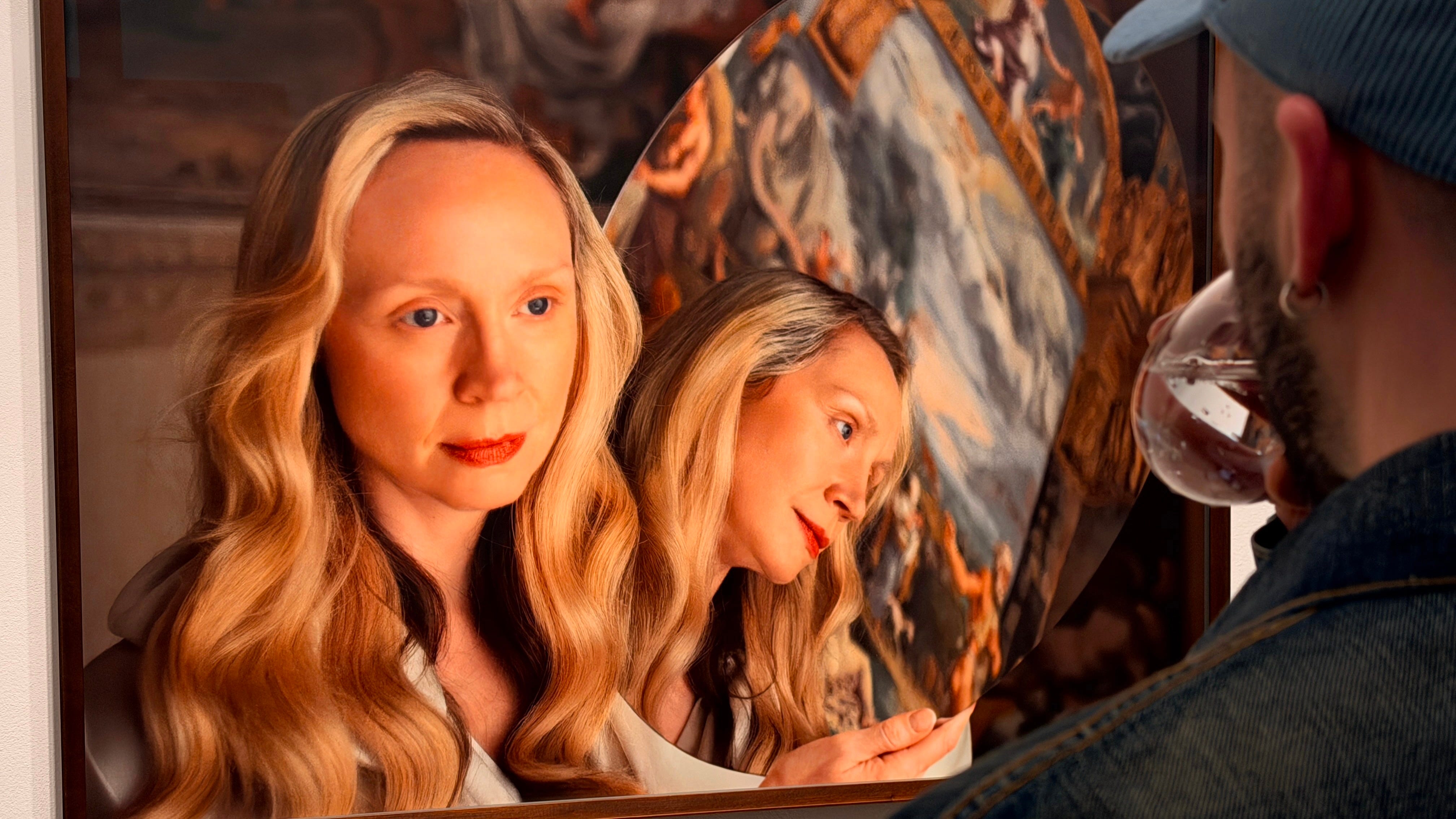
Film has always been central to his work, but here he brings together visual opulence and intellectual density with particular assurance. Drawing on the thinking of Donna Haraway - especially her call to “stay with the trouble,” to inhabit the ambiguities and disruptions of the present - Julien constructs a speculative dialogue that is both philosophical and sensorial. The film weaves together literary influences including Naomi Mitchison’s Memoirs of a Spacewoman (1962), Octavia E. Butler’s Parable of the Sower (1993), and the work of Ursula K. Le Guin, among others - writers often associated with feminist and female-centred science fiction.
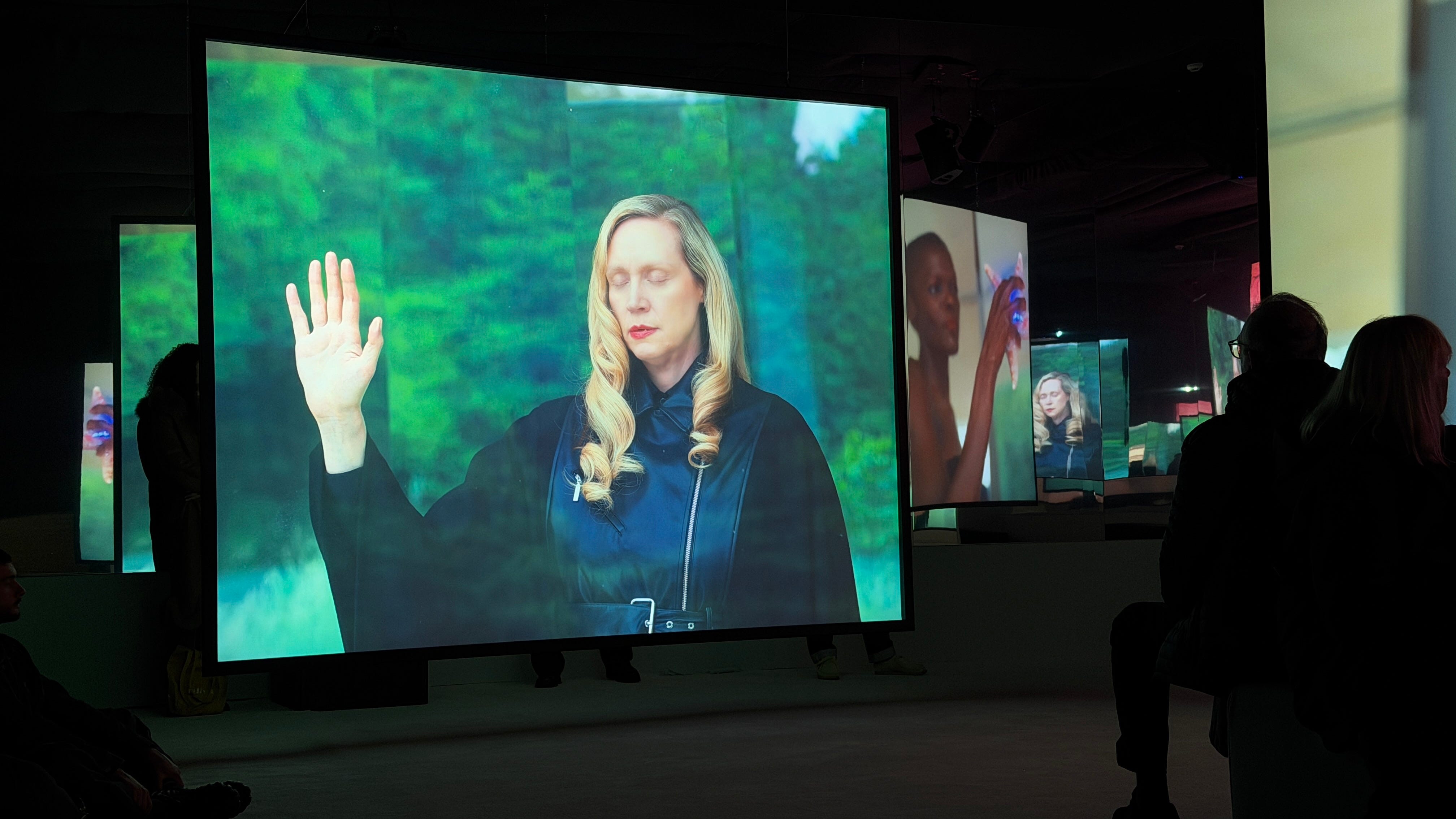
These texts are not adapted directly but fused into a speculative exchange between two protagonists, played by Gwendoline Christie and Sheila Atim. Through their dialogue and presence, Julien explores themes of kinship, interspecies cohabitation, and the permeability of boundaries - between eras, between bodies, between fixed notions of gender, race and being.
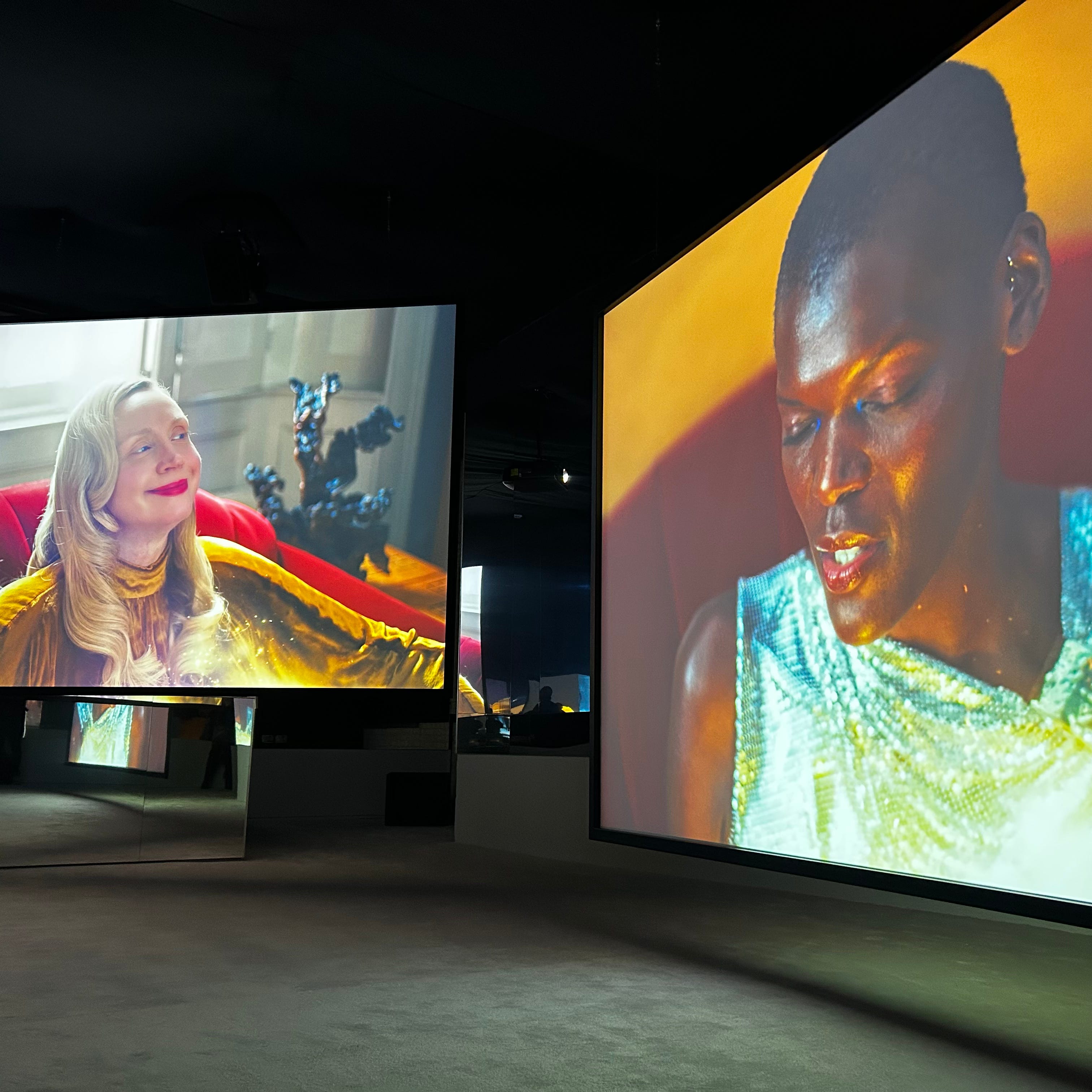
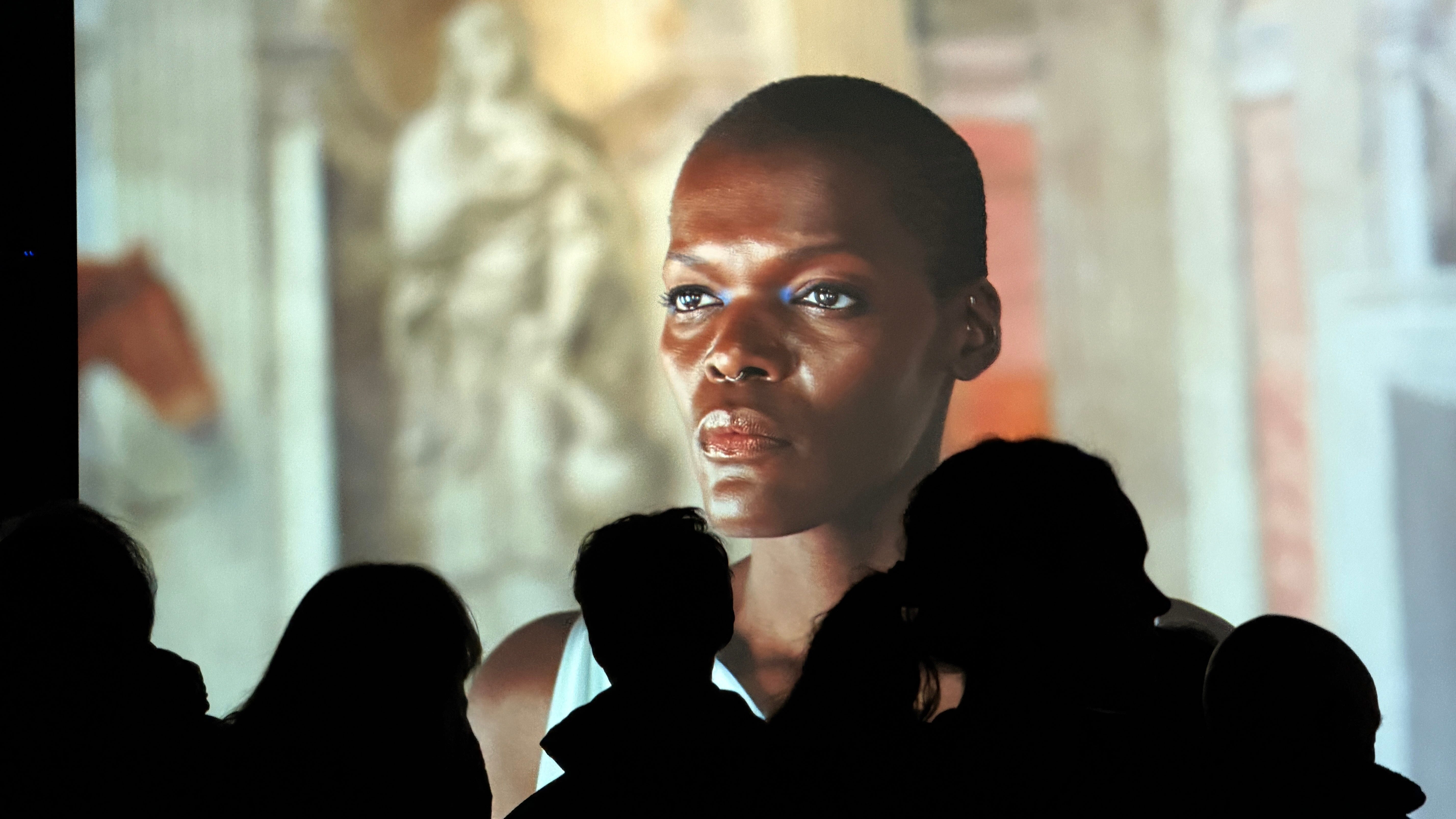
The choice of Palazzo Te is conceptually resonant. Originally conceived as a site of architectural experimentation, perspectival play and deliberate distortion, it challenged the symbolic and visual norms of Renaissance classicism. Julien draws out these qualities: circular mirrors fragment and multiply Christie’s statuesque figure, draped in diaphanous gowns that evoke both courtly splendour and futuristic apparition. The visual language echoes the shock of early perspectival innovation in sixteenth-century Italy - that sense of entering a new perceptual order.
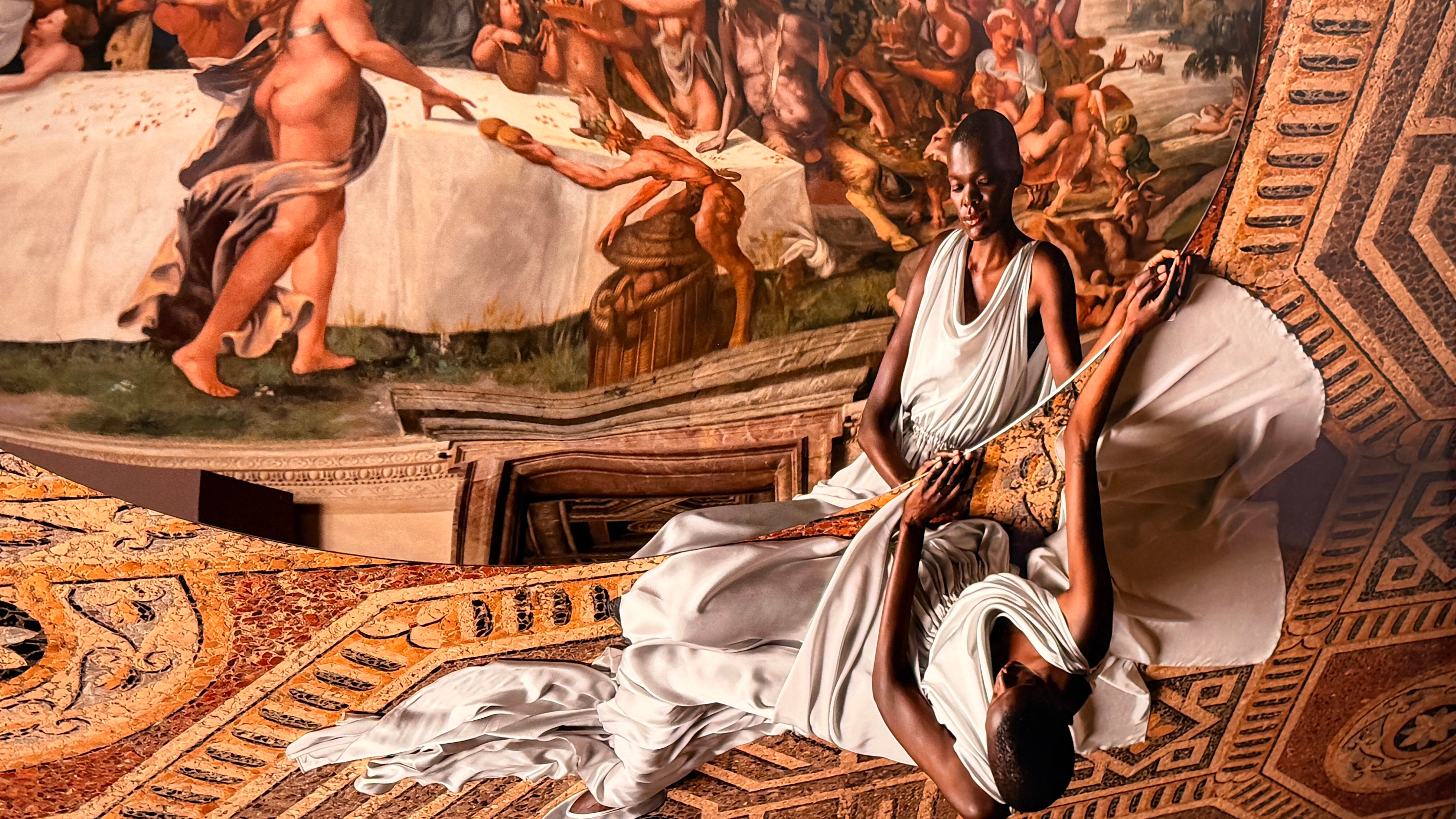
The result is part slick science-fiction epic, part nature documentary, part Renaissance fantasia. Yet beneath the aesthetic luxuriance lies a persistent question: how do we inhabit transformation? Julien suggests that metamorphosis is neither rupture nor spectacle alone, but a continuous condition of human experience - from classical myth to our own projected dystopian futures