
The Other 90s
Beyond Britpop: dancefloors, magazines and making it up as you went along

90s 90s 90s
With Edward Enninful announcing a forthcoming 90s cultural retrospective this week at Tate Britain (opening in October), it feels like there’s no escaping the decade for a while yet.
Between the frenzy around the Oasis tour last year, the renewed fascination with John F. Kennedy Jr. and Carolyn Bessette-Kennedy (helped along by Love Story), and the steady churn of fashion social media clickbait, the 90s have shifted from revival to something closer to fixation.
But it does raise a question: how much of what we’re celebrating actually holds up?
Take JFK Jr. Strip away the height, the symmetry, the Kennedy mythology—what are you left with? Oversized suits. Slightly awkward proportions. The occasional backwards Kangol. Would any of it register today without the man inside the clothes?
The Rabbit Hole
That thought sent me back—down the rabbit hole.
Specifically, into Instagram—and more precisely the 90slondon account, where I lost a good few hours without noticing.
Not passive scrolling. Proper immersion.
What’s there isn’t just fashion or culture—it’s evidence. Fragments of a scene still figuring itself out. Cross-cultural in the best possible way: music, fashion, art, place, ideas.
And certain images stick.


Rosemary Ferguson in metallic Helmut Lang jeans—nothing else really matters in the frame. The shine, the cut, the attitude. Futuristic, but completely unforced.
Then again, the same model, androgynous in a second-hand suit, slightly off in proportion, worn with battered trainers and a Dunkin Donuts’ tee. The kind of look that shouldn’t quite work, but absolutely does.
Those two images alone say more to me about “style” than any number of neatly archived “menswear” references.
Because they’re not about correctness. They’re about instinct.
The DIY Eye
What emerges from that world—The Face, Corinne Day, Melanie Ward and others—isn’t polish, but improvisation.
Talent, nerve, and a kind of visual opportunism.
Looks weren’t assembled so much as found. Or thrown together. Or resolved at the last possible moment.
I remember poring over those shoots, trying to decode that particular kind of effortlessness—the “don’t care” that was, of course, incredibly deliberate.
What we now take for granted started there:
Vintage mixed with designer
High fashion stripped of ceremony
The early (and well-deserved) dominance of Helmut Lang
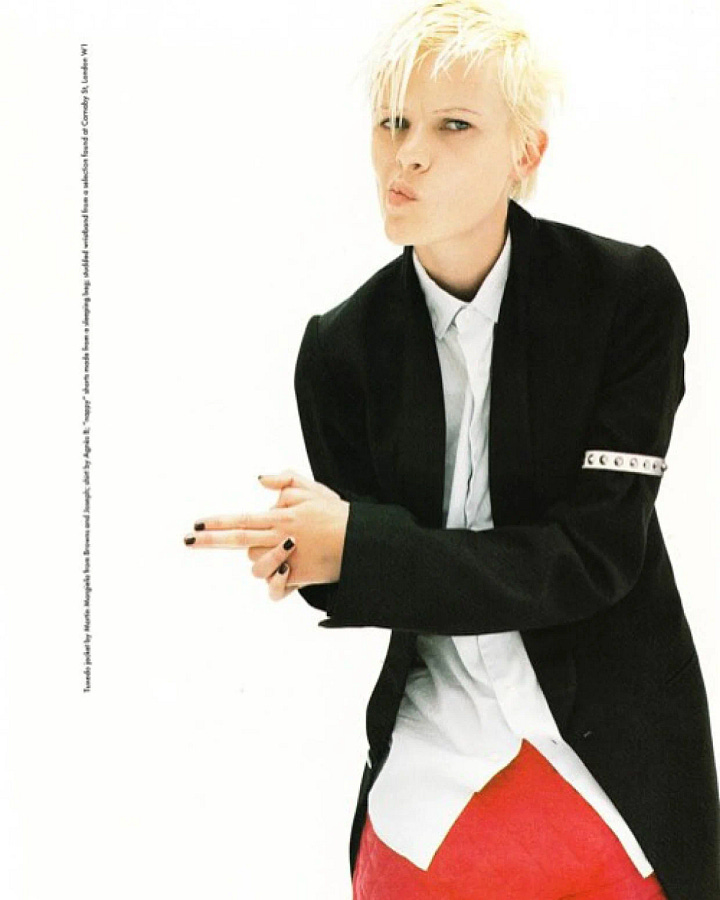
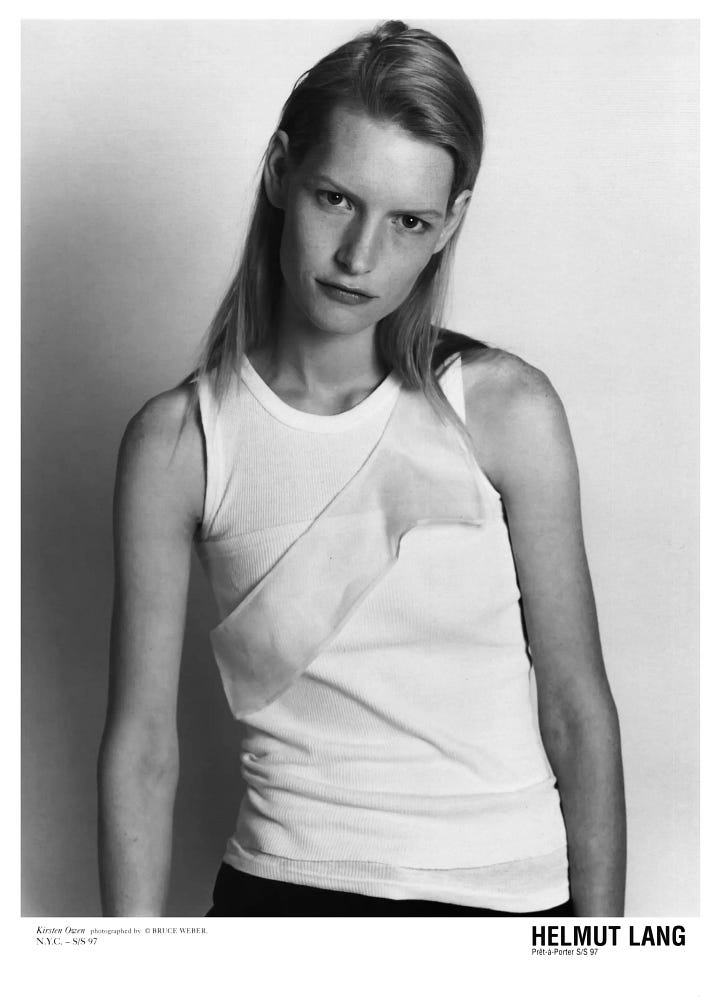
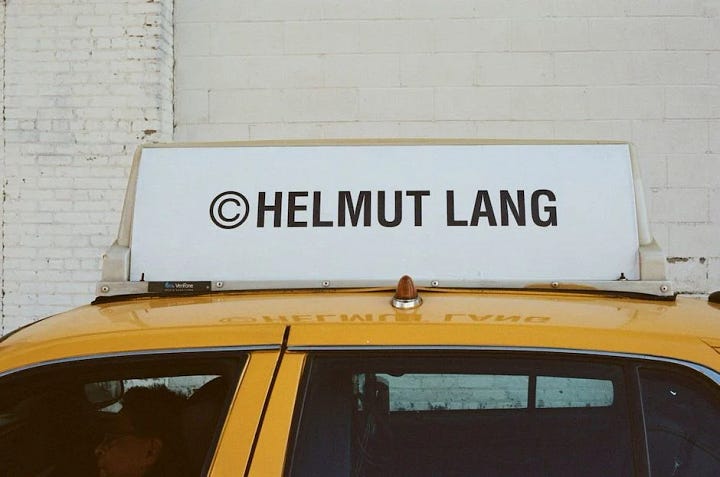
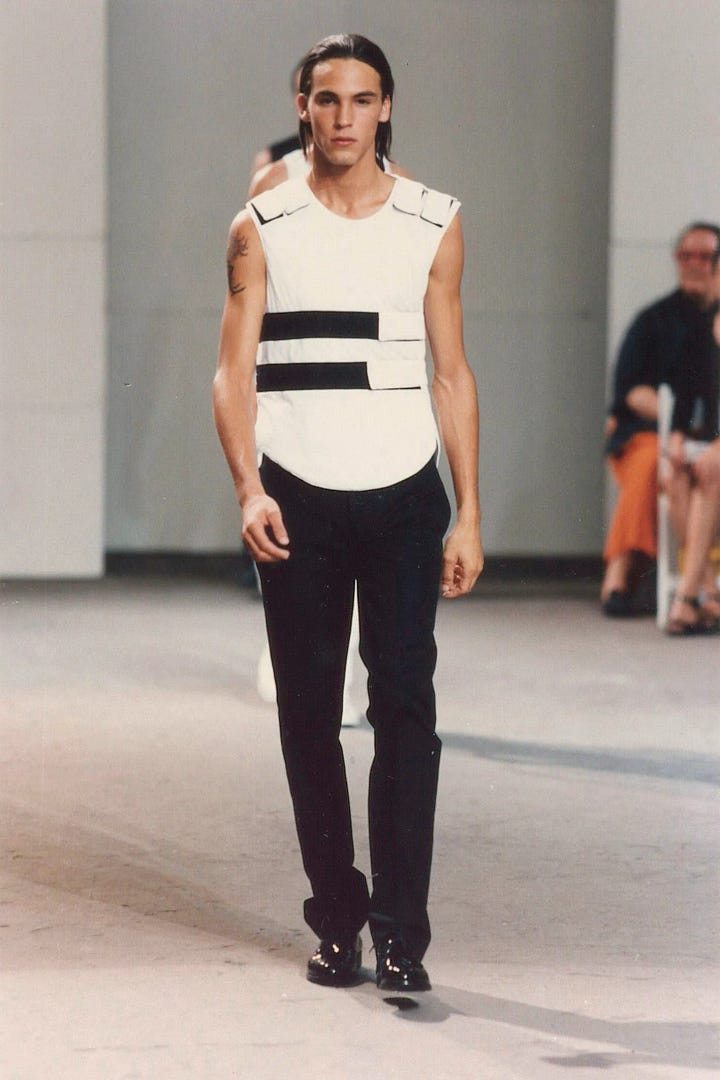
Another classic Melanie Ward/Corinne Day collaboration from the Face, 1993. Early Helmut Lang campaigns, a runway image from 1998.


And crucially, a disregard for strict categories.
Menswear, in hindsight, feels like the wrong lens entirely. My references weren’t “menswear icons” but images like Ferguson in Helmut Lang, that off-kilter suit with trainers—or even Kurt Cobain in a flowered dress. That tension—between refinement and the everyday—felt far more instructive than anything neatly labelled.
Across the Atlantic
There was a constant exchange happening.
Magazines, music, imagery—and people actually travelling—ideas moving back and forth between London and New York:
Mark Wahlberg and Chloë Sevigny on the cover of Interview
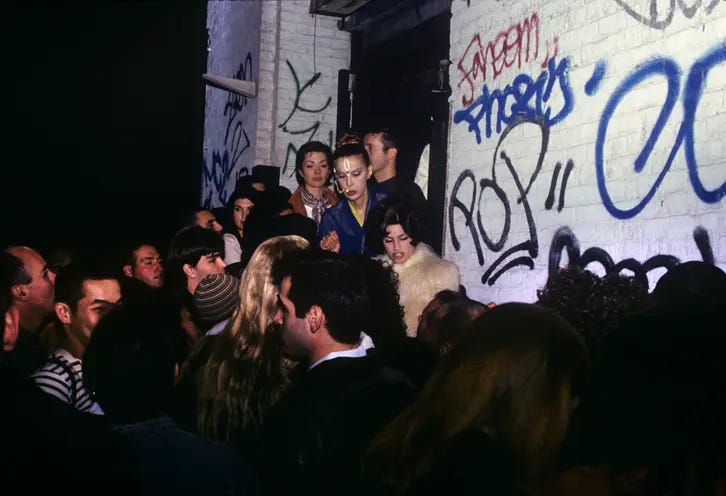
Club Kids getting it—but not quite—and stretching the boundaries of what was acceptable
Kurt Cobain in a dress—or a tiger suit
Duffer of St George bringing Lower East Side fashion hauls into Soho; Nike Air Rifts turning up at Jones Covent Garden at elevated prices
Robbie Williams’ bleach blond moment (not to mention a peroxide David Sims 🫠)
Arena Homme Plus pushing men’s fashion towards the cinematic ambition women’s fashion photography had held since the 50s
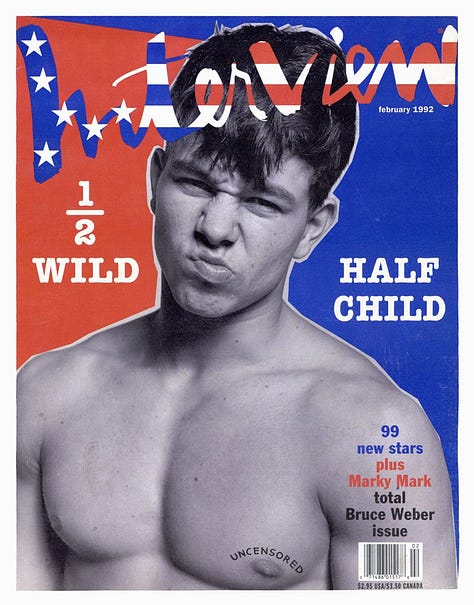
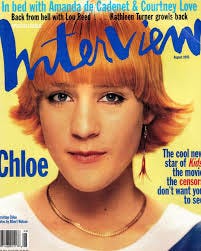
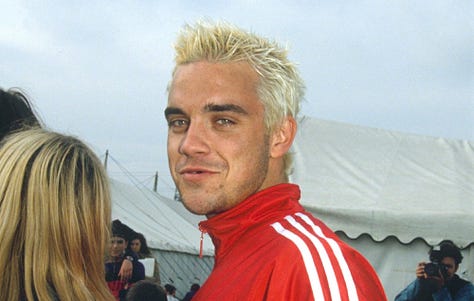
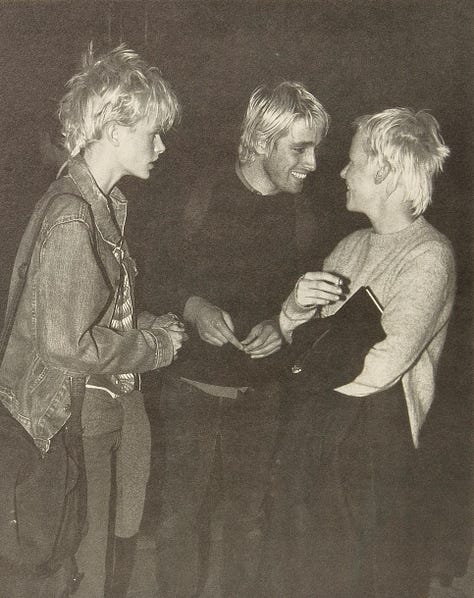
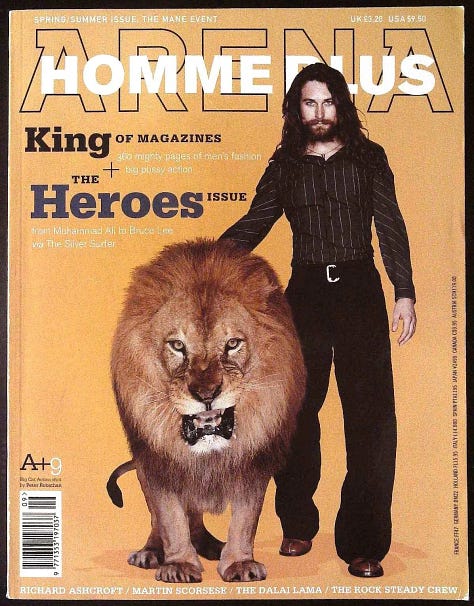
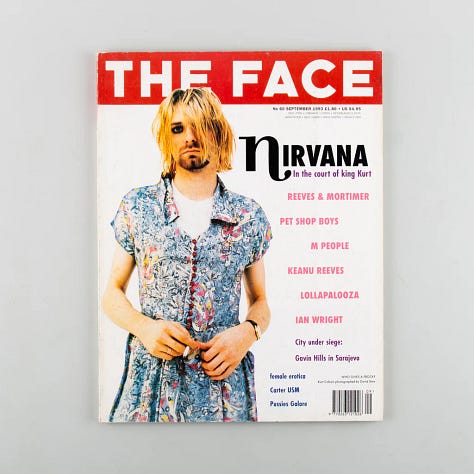
Interview covers, Robbie's Glastonbury 1995 moment, peroxide Sims, AHM, Kurt's Face cover.


It wasn’t just fashion—it was a shift in how fashion looked, and what it could reference.
The Underground Was the Point
The mainstream story—Britpop, Oasis, lad culture—is only a fragment.
What mattered just as much, if not more, was happening elsewhere: in nightclubs, on dancefloors, behind DJ booths.
For a moment, what a DJ could do with turntables and a crate of vinyl felt more vital than another guitar band cycling through verse-chorus-verse. There was experimentation, unpredictability—an energy that fed directly back into how people dressed.
Nightclubs weren’t just social spaces. They were incubators. And you had to experience it, not just watch the reel. Actual travellers became touchstones of remote scenes.
What Stays With Me
Before smartphones. Before fast fashion. Before the flattening effect of social media.
There was space—to experiment, to fail, to assemble an identity from fragments of personal experience and references.
What that era gave me wasn’t nostalgia, but a framework:
An instinct for local scenes and subcultures
The confidence to mix vintage with designer
An appreciation for Helmut Lang’s restraint and utility
A love of “wrongness”: a band tee under tailoring, battered trainers with premium leather trousers
And the understanding that contradiction isn’t a flaw—it’s the whole point.
On “Classics”
Which is why I’ve always resisted the idea that classics—especially in menswear—are fixed.
They’re not.
A Vivienne Westwood loose-knit mohair sweater is a classic. The pirate boot is a classic. So are Helmut Lang’s bondage-strapped pieces or metallics, if you’re lucky enough to find originals. Jean Paul Gaultier’s prints under Junior Gaultier. Anglomania denim.
Classics aren’t always about conformity. They’re also about eccentric, one-off ideas which somehow endure.
Closing Thought
I’m curious to see how the Tate Britain show frames it all.
But in the meantime, I’m happy dipping into the rabbit hole-where the real story lives.